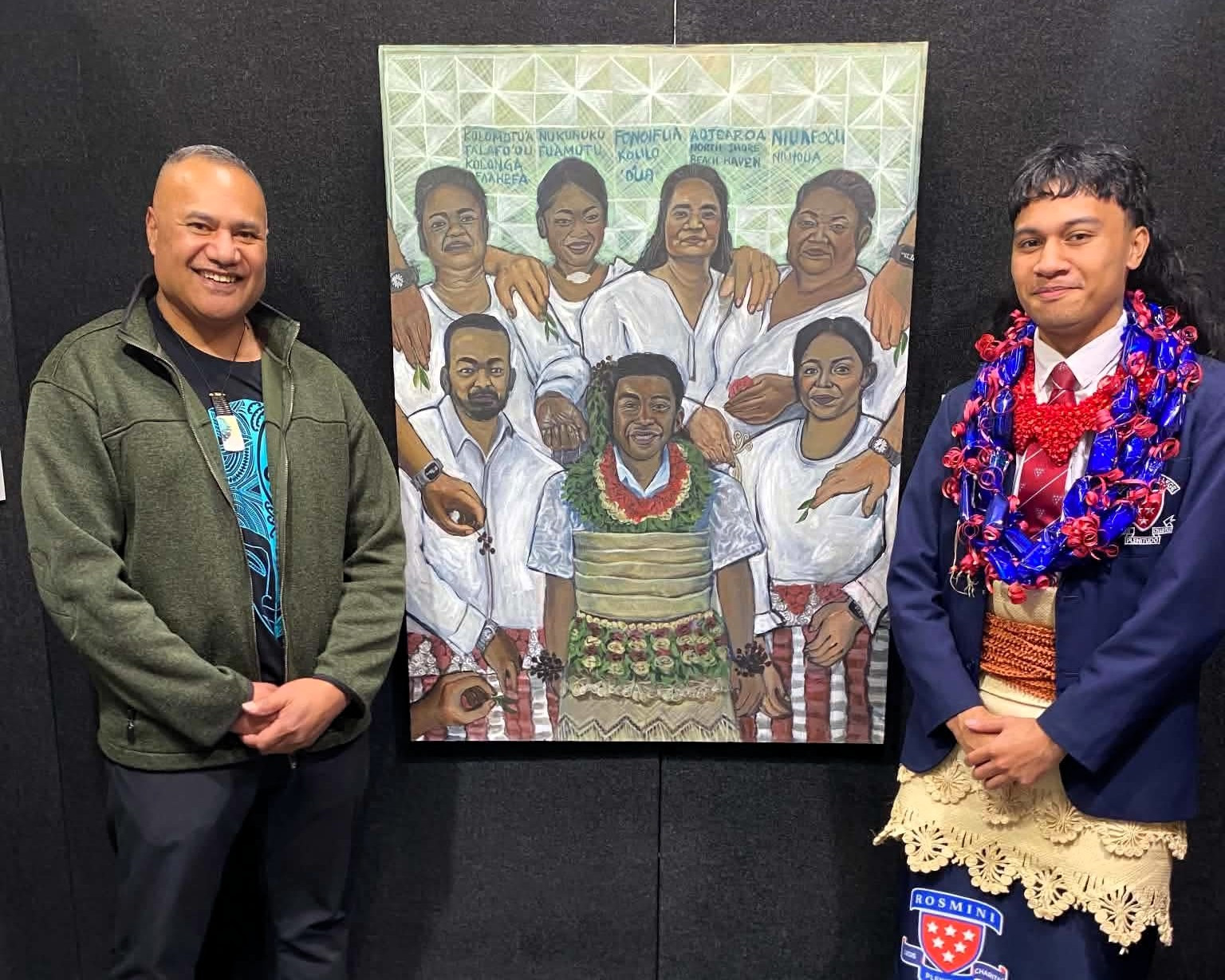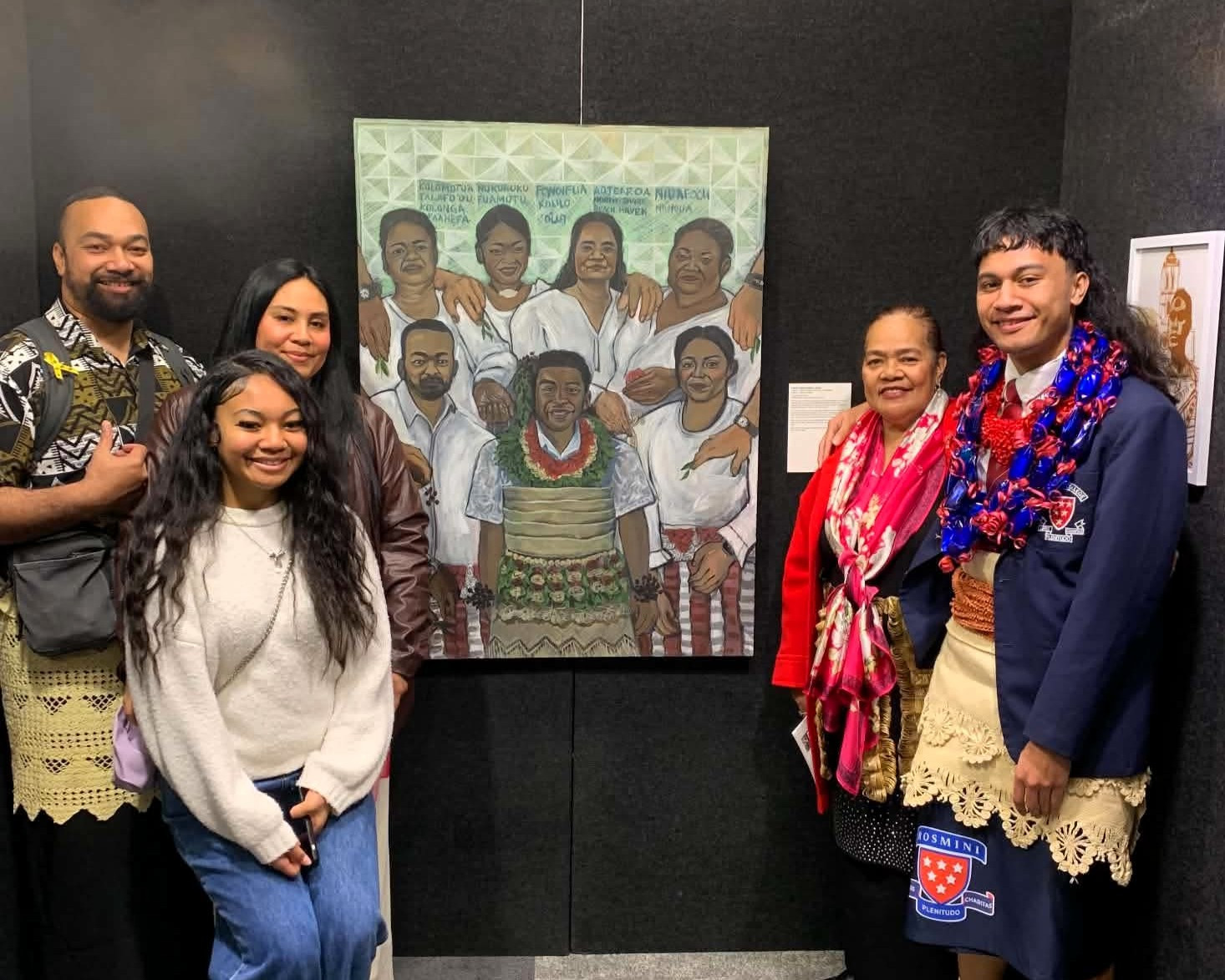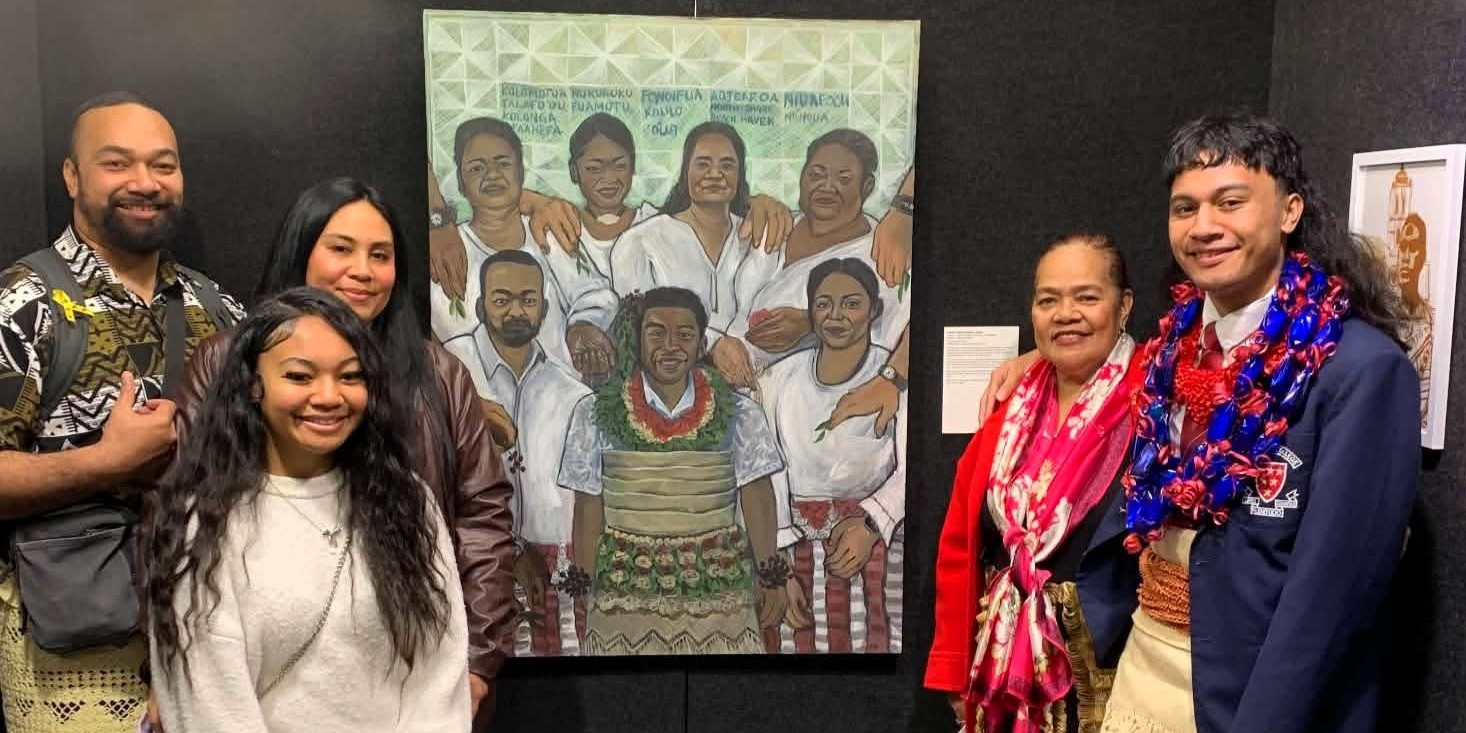
For the third consecutive year Patrick’s talent has been recognised at the national exhibition
Rosmini’s Arts & Cultural leader Patrick Lemeki has delivered an extraordinary showing at Wellington’s annual Ringa Toi Student Exhibition, taking out first place in the Temoana Nui a Kiwa Measina category. With 159 art works accepted from 53 schools. Patrick captured the top spot for both of his submitted entries: The hands of many and Tā tatau.
Guest judge Jack Kirifi confessed he was moved to tears by the young artist’s submissions, praising Patrick’s rare ability to capture the heart of Pasifika identity, faith, family, and community. Unable to separate the brilliant entries, Kirifi awarded both pieces the top honour.
This marks the third consecutive year Patrick’s talent has been recognised at the national exhibition — a remarkable milestone for an exceptional young creative.
We are so proud of you, Patrick!
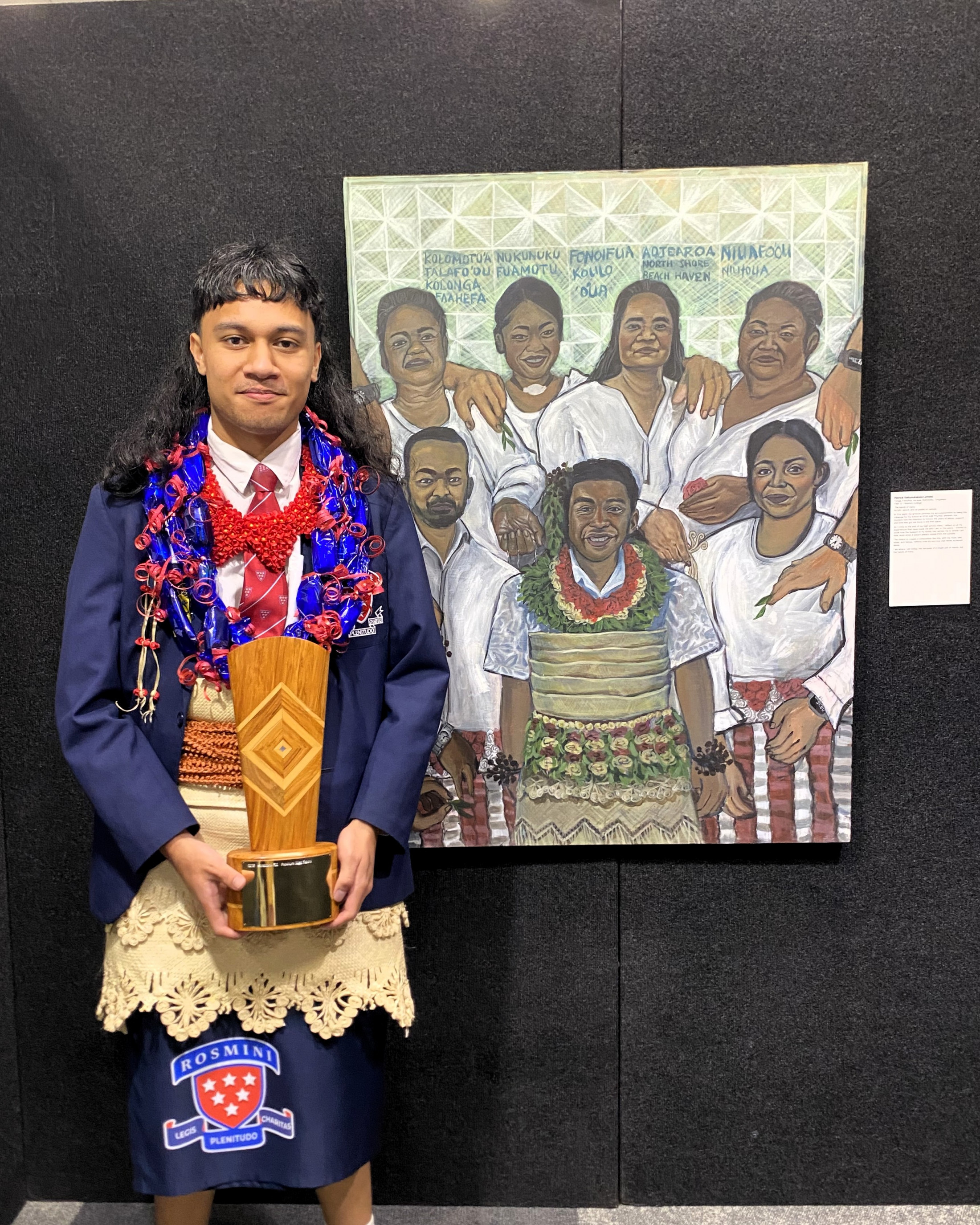
The hands of many
Acrylic, pencil, and oil pastel on canvas
At first sight, my artwork portrays my accomplishment as being the Vāhenga for my school at 2026 ASB Polyfest. Beneath this moment was the intention to honour the years of labour, support, and love that got me there in the first place.
As I come to the end of my high school years, I reflect on all my experiences that have made me who I am. In this piece, I wanted to show how the support of my family has carried me to where I am now, even when it wasn't always visible from the outside.
The choice to create a composition like this, with my mum, dad, sister, and Nenas, reflects how my success was never achieved alone.
I am where I am today, not because of a single pair of hands, but the hands of many.
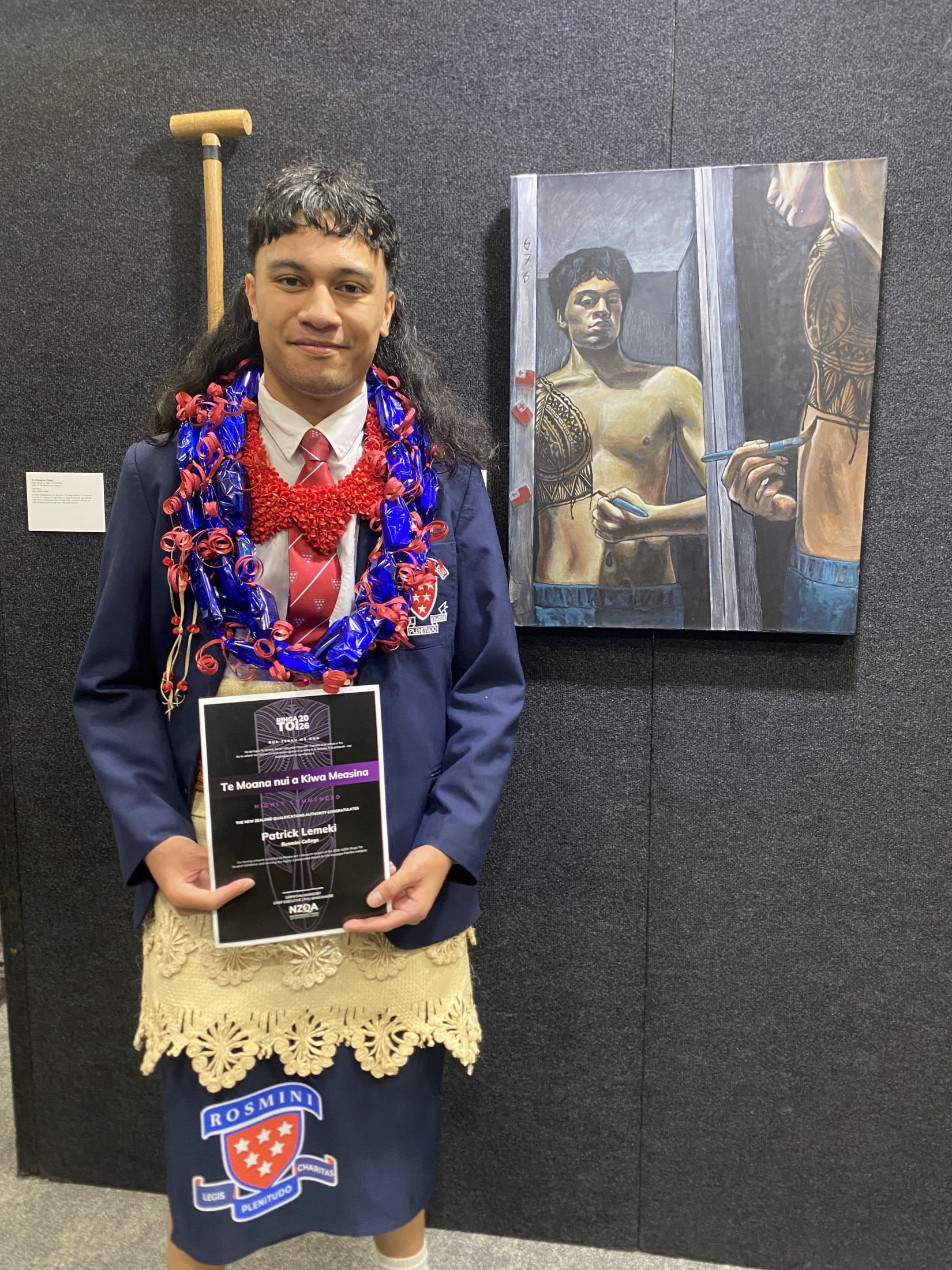
Tā tātau
Acrylic and pencil on primed paper
Cultural belonging and 're-connection' can often be a quiet but heavy struggle for many young Pasifika, which I look to portray through this painting.
I explored the idea of 'performing' culture as a way of reconnection. Traditionally, tattoos are carved into the flesh, symbolising permanence, identity, and heritage. However, the figure's choice to apply black paint instead symbolises the perceived 'inauthenticity' that Pasifika people can sometimes feel when connecting to their culture.
Growing up on the North Shore of Auckland often made Tonga feel like a foreign country, despite being told that it was mine. This painting represents the tension between cultural pride and the feeling that this pride can sometimes become a performance.
For me, these two experiences aren't mutually exclusive; I can feel deeply connected to my culture while simultaneously questioning the authenticity of that connection.
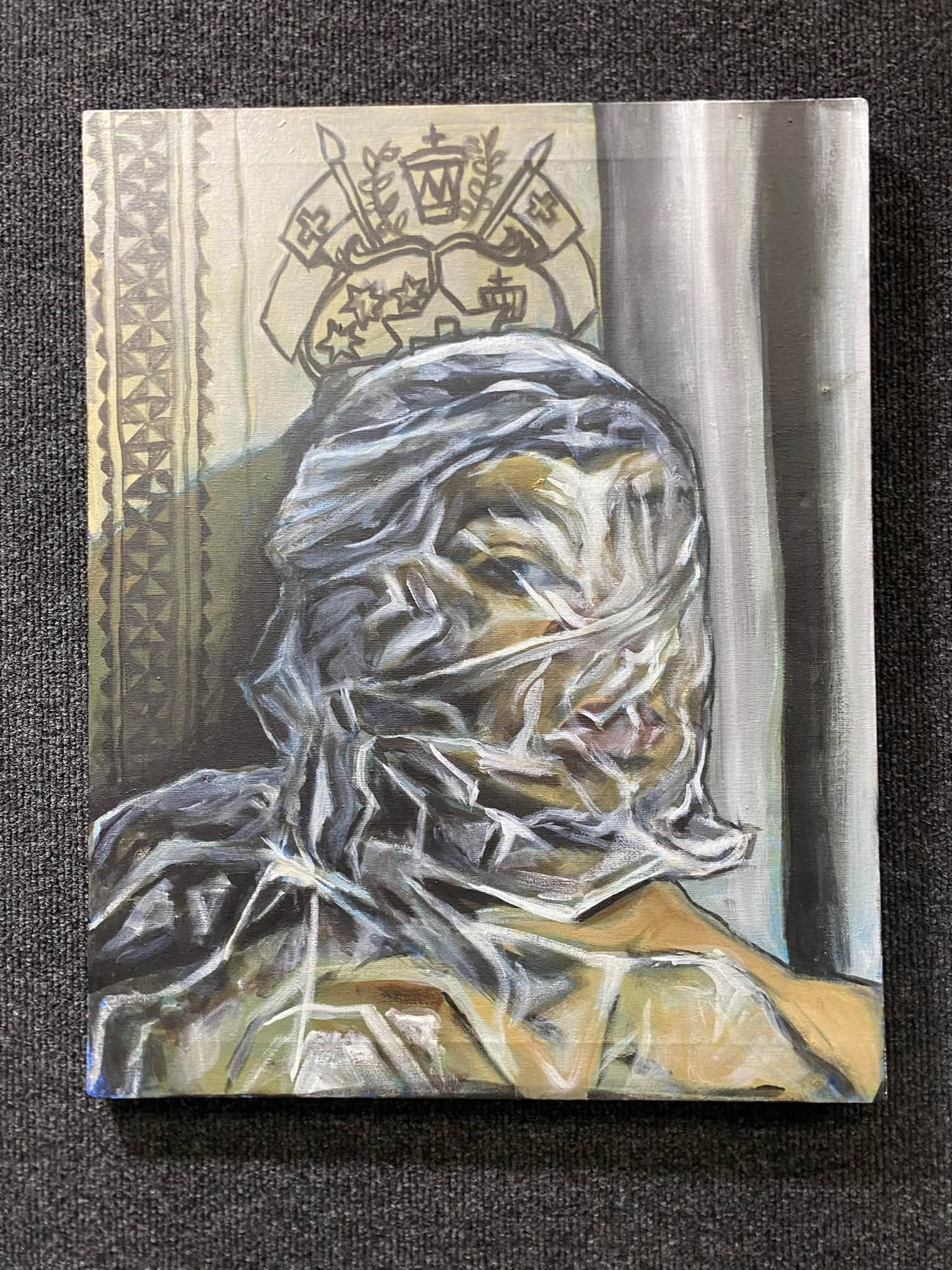
"you're plastic"
Acrylic on canvas
This painting explores being 'plastic' - a term in Pasifika communities describing someone who's externally Pasifika, but labelled as internally 'fake'.
Originally, I intended to portray the experience of being fully Tongan, yet feeling culturally disconnected - playing on the phrase "you're plastic" - but while painting, the plastic metaphor evolved.
Having the figure's eyes, mouth, and ears covered obstructs his ability to engage with the world, warping both his and the viewer's perception of it. The figure sees, but never clearly, while the viewer sees the outside, but not the person beneath, reflecting the complexity of diasporic-identity.
Cultural disconnection can feel like a plastic barrier, but reconnecting with it revealed how the label itself also limited my connection to it, becoming a wider exploration of being 'Pasifika enough'. It revealed how external appearances can simultaneously inform and distort our perception of others.